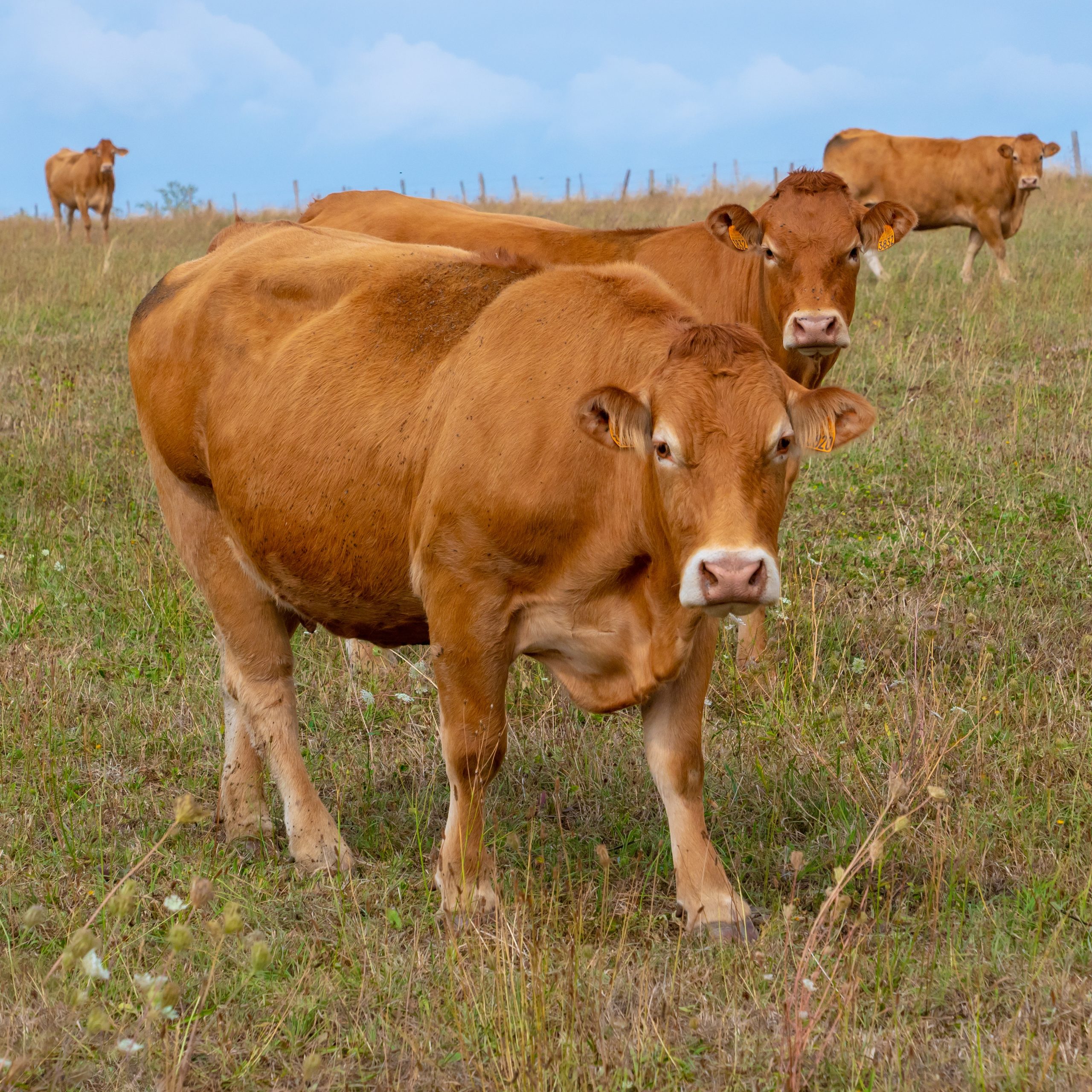
Dehorning has long been a routine management practice in cattle production, helping to reduce the risk of injury within the herd and improve safety for handlers. However, it is also recognised as a significant animal welfare concern, particularly when performed later in life or without adequate pain relief.
As expectations around animal welfare continue to rise, driven by producers, processors and consumers alike, there is growing interest in alternatives that reduce the need for invasive procedures. One of the most effective long-term solutions is the use of genetic testing to breed naturally polled cattle, removing the need for dehorning altogether.
What are the advantages of polled cattle?
Polled animals are naturally hornless due to their genetics. The polled trait is inherited, meaning cattle can be bred to be horn-free without physical intervention.
Breeding naturally polled cattle offers a range of benefits for both animals and producers, including:
- Improved animal welfare by eliminating the need for dehorning
- Reduced labour and handling associated with yarding and procedures
- Lower stress levels for cattle, supporting better health and performance
- Improved workplace safety by reducing the risk of injury from horns
- Greater market acceptance, as welfare-focused production becomes increasingly important
For many producers, polled genetics represent a practical way to align productivity goals with welfare outcomes.
The role of DNA testing for polled cattle
While some animals appear hornless, visual assessment alone does not always tell the full genetic story. Cattle may be polled, horned, or “scurred” in appearance, but still carry different combinations of horned and polled genes.
DNA testing allows producers to accurately identify whether an animal carries the polled gene and whether it is homozygous polled or heterozygous polled. This data can provide us with the following insights:
- Homozygous horned (hh) animals will be horned
- Homozygous polled (PP) animals will always be polled and pass the trait to all offspring
- Heterozygous polled (Ph) animals will be polled or scurred, but may still produce horned progeny
Some cattle show scurs (small, loose horn growth that is not attached to the skull). Scurs only occur when the polled gene is present and are influenced by a separate scurs gene. The expression of scurs is also sex-dependent:
- Males require only one copy of the scurs allele (Scsc or ScSc) to express scurs
- Females require two copies (ScSc)
This interaction explains why scurs can be difficult to predict solely from appearance.
Relying solely on visual traits can result in unexpected horned calves, particularly when breeding from animals that carry hidden horned genes. Genetic testing removes this uncertainty, giving producers confidence in their breeding decisions and in the long-term direction of their herd.
Using genetic testing to breed naturally polled animals
By testing bulls and replacement females for the polled gene, producers can make informed selection decisions that accelerate the transition to a horn-free herd. Bulls, in particular, have a significant influence, as a single sire can affect hundreds of calves.
Importantly, selecting for polled genetics does not mean compromising on other key traits. Genetic test results can be incorporated alongside existing breeding objectives such as growth, fertility, carcase traits and feed efficiency.
This balanced approach ensures producers continue to make genetic progress while reducing the need for management interventions like dehorning.
Breeding out costly traits
Genetic testing can also help identify and manage undesirable traits that impact profitability. By avoiding the selection of animals prone to certain inherited conditions or performance-limiting traits, producers can:
- Reduce involuntary culling
- Lower veterinary and treatment costs
- Improve overall herd health and longevity
- Increase consistency and predictability in progeny
Over time, breeding out costly traits supports a more resilient, efficient and profitable operation.
The future of genetic testing
For herds with a strong history of horned genetics, transitioning to polled cattle may take time. Genetic progress is cumulative, and results are achieved over generations rather than overnight.
Advances in DNA testing are continuing to improve accuracy, accessibility and the range of traits that can be assessed. As technology develops, producers will have even greater ability to shape their herds in ways that support productivity, welfare and sustainability.
XytoVet DNA testing
XytoVet offers reliable DNA testing services that help producers make informed, data-driven breeding decisions. From identifying the polled gene to managing inherited traits and improving herd performance, XytoVet testing provides practical insights that can be applied directly on-farm.
Contact XytoVet today to learn how DNA testing can support your breeding program and help future-proof your operation.
References
- Meat & Livestock Australia (2020), ‘Improving the Australian Poll Gene Marker Test’ MLA Final Report, Accessed January 2026 https://www.mla.com.au/contentassets/6835af7a3d344afc9a50cf341d98f776/l.gen.1713_final_report.pdf
- Southern/Tropical Beef Technology Services (2016), ‘Breeding for Polledness’ Fact Sheet, Accessed January 2026 https://breedplan.une.edu.au/media/4i1nz1jt/breedpoll.pdf