
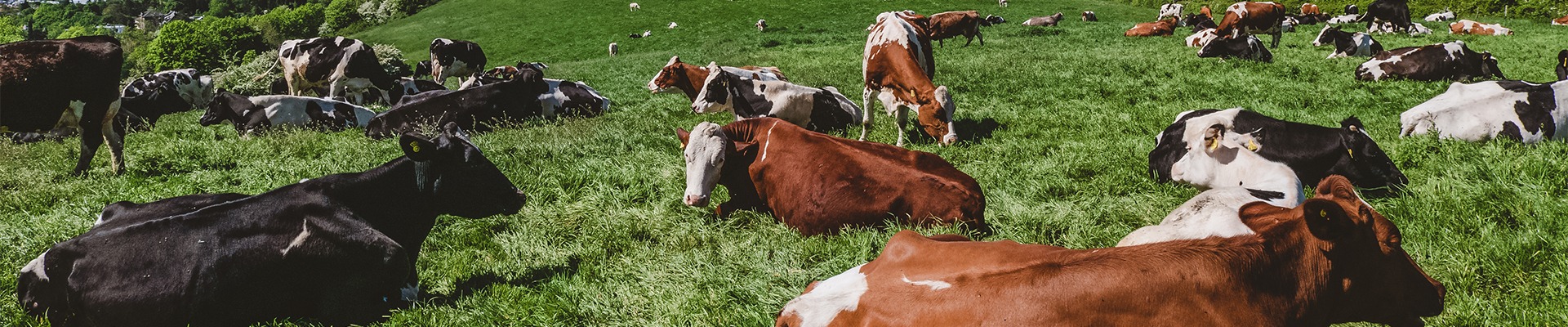
What is crossbreeding?
Crossbreeding involves mating animals from different breeds to produce progeny that have desirable traits from both parents. It has the potential to enhance productivity, adaptability and sustainability in the livestock industry. The practice can improve various aspects of livestock production, including disease resistance, growth rates, reproductive efficiency, and overall performance.
This blog examines the role of genomic data in crossbreeding and how it can lead to more sustainable livestock management practices. We will also explore how genotyping, a powerful scientific tool, is helping improve the crossbreeding process. Genotyping ensures that breeding decisions are based on reliable data and genetic evaluation, rather than traditional trial-and-error methods.
Crossbreeding, genotyping and sustainability
Crossbreeding is closely tied to sustainability. By combining the desirable traits of different breeds, crossbreeding can lead to more resilient animals that are better adapted to their environments, more resistant to diseases, and more efficient in terms of feed conversion and reproductive performance. These factors collectively help producers reduce resource inputs, minimise waste, improve genetic diversity and increase the long-term viability of their operations.
An animal’s ability to thrive in a particular environment, for example, can be improved by crossbreeding. It is common to improve herd productivity in marginal areas by crossing a Bos taurus or British breed exhibiting desirable growth rates with a breed that is genetically adapted to living in hotter and drier climates (Bos indicus). In general, by improving productivity, farmers can produce more meat, milk, or wool with fewer inputs, thereby reducing the overall environmental impact of livestock farming. Moreover, sustainability is not just about minimising negative impacts on the environment; it is also about ensuring the long-term profitability of farming systems. Crossbreeding enhances these aspects by increasing productivity while also improving the resilience of livestock species, leading to fewer veterinary costs and improved welfare standards.
In order to achieve these sustainability outcomes, genotyping provides a data-driven approach to genetic evaluation that can complement the traditional visual assessment approach to breeding, thereby making selective breeding practices more efficient. Genomic technologies allow farmers to make better decisions about the best candidates for crossbreeding and the performance of the progeny through the identification of Genomic Estimated Breeding Values (GEBVs).
The benefits of genetically informed crossbreeding
Genetic gain: Enhance positive traits and reduce negative ones
One of the key advantages of using genomic data for crossbreeding is the ability to select for economically important traits while minimising undesirable ones. Through genotyping, farmers can identify specific genetic markers linked to traits like disease resistance, growth rate, reproductive efficiency, and feed conversion. By focusing on these markers, breeders can use genomic selection to produce offspring with improved characteristics, such as faster growth, higher fertility, and better overall health. This, in turn, improves generational genetic gain.
At the same time, livestock genomic selection allows breeders to minimise the risk of passing on genetic defects or undesirable traits, such as low disease resistance or poor adaptability to environmental stress. This strategic approach ensures that only the best genetic traits are passed on to future generations, leading to healthier, more productive livestock and reducing the need for interventions like antibiotics or other treatments.
Sustainability: Reduce the environmental impact of livestock
Livestock farming has long been associated with environmental challenges, particularly in relation to resource use and greenhouse gas emissions. However, data-informed breeding decisions enabled by genotyping can significantly reduce these environmental impacts. For instance, genetic selection for improved feed efficiency can help animals convert feed into meat, milk, or wool more efficiently. This reduces the amount of feed required, lowering both production costs and the environmental footprint of livestock farming.
Moreover, breeding for improved productivity can also reduce methane emissions, one of the major contributors to climate change. In ruminants, methane is produced during digestion; therefore, by selecting animals that are more efficient in utilising their feed, farmers can reduce the amount of methane emitted per unit of production. This contributes to a more sustainable livestock industry with lower environmental impacts.
Better breeding programs: Achieve long-term genetic improvement
Genetically informed animal breeding has a strong potential for long-term genetic improvement. Crossbreeding programs, guided by genotyping, have a generation-by-generation impact on the genetic diversity of livestock populations. Over time, breeders can continually improve traits such as disease resistance, productivity, and environmental adaptability, creating a sustainable and resilient breeding program that supports both the economic and environmental goals of the farming operation.
However, the long-term success of such programs relies on maintaining comprehensive genomic databases and assessing genetic diversity over time. These databases allow breeders to track the genetic contributions of particular animals and make informed decisions based on data, rather than relying on outdated practices. With accurate, up-to-date genomic information, farmers can continue to refine their breeding programs to achieve sustainable improvements and ensure the long-term viability of their livestock operations.
How XytoVet supports effective crossbreeding
As experts in genomics and livestock management, XytoVet is committed to supporting Australian farmers with targeted crossbreeding strategies that are informed by cutting-edge genotyping technology. Our goal is to help you enhance productivity, boost disease resistance, and improve environmental sustainability.
Have questions about how targeted crossbreeding can support your livestock goals? Don’t hesitate to get in touch with us. Our team is here to guide you through every step of the process and provide the insights you need to make informed, sustainable decisions for your farm.